Dried blue lotus flower, wholesale
Nymphaea caerulea, dried and packed for wholesale buyers. Full specifications, pack sizes and a buyer checklist.
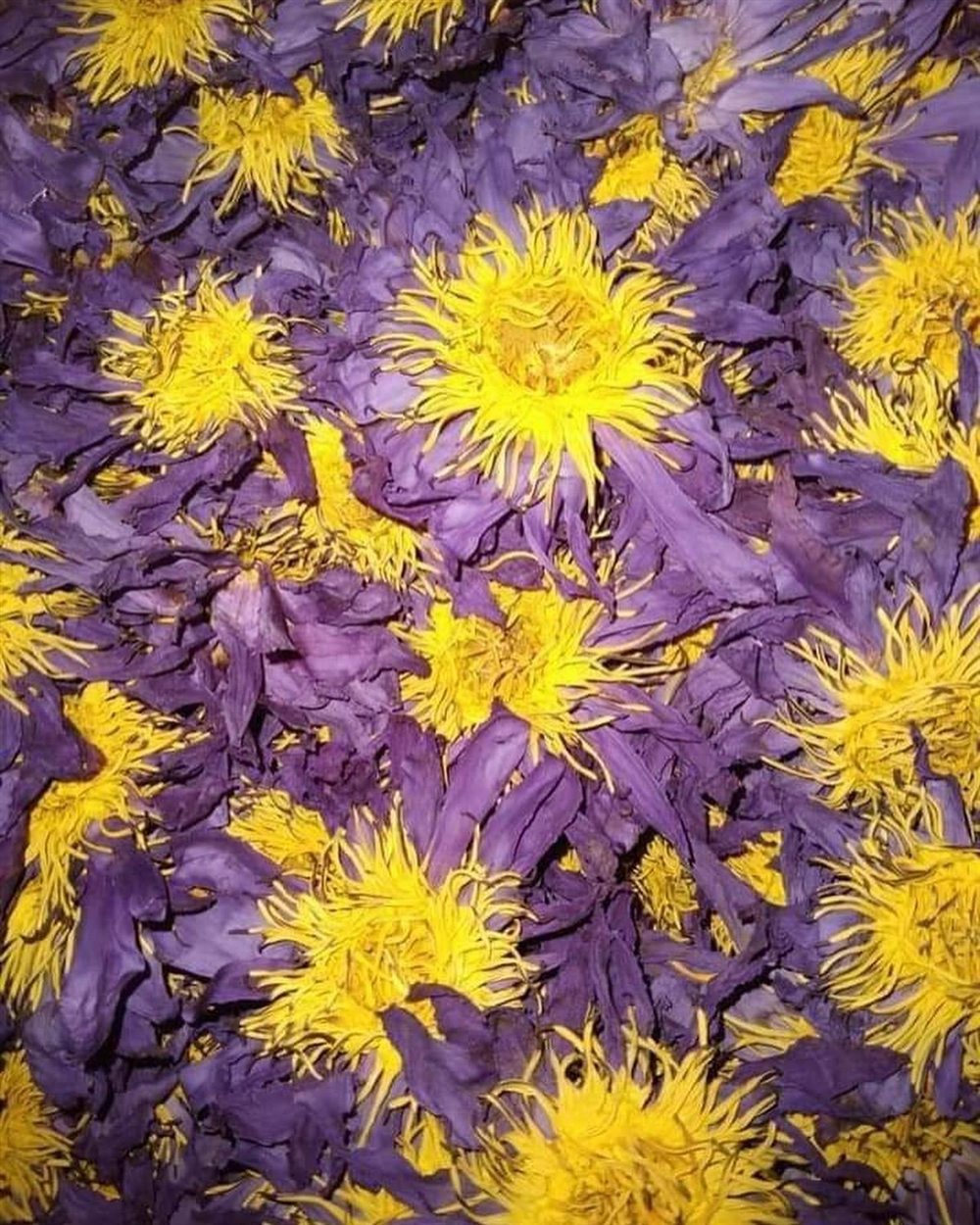
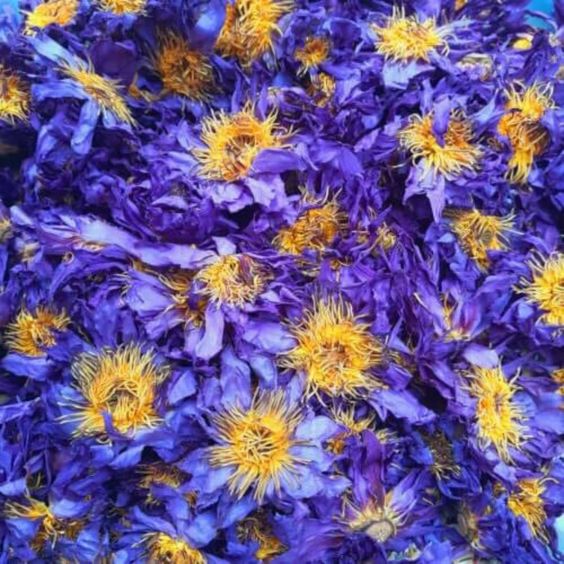
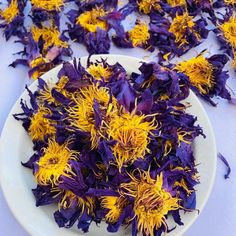
Specifications
| Botanical name | Nymphaea caerulea (blue water lily) |
| Part | Whole dried flower |
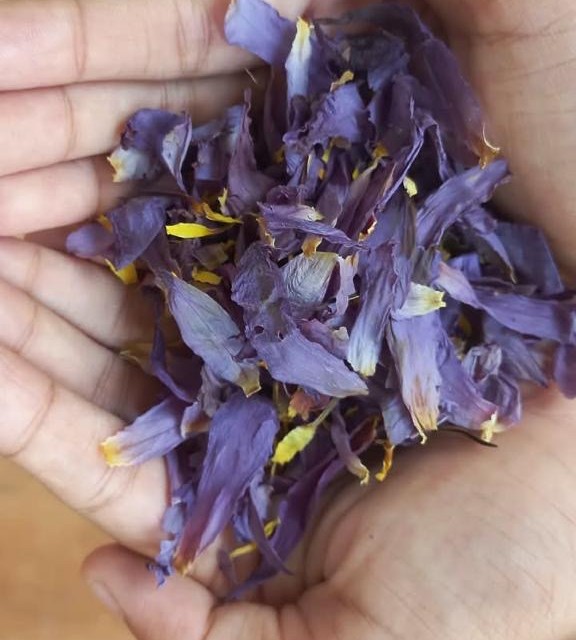
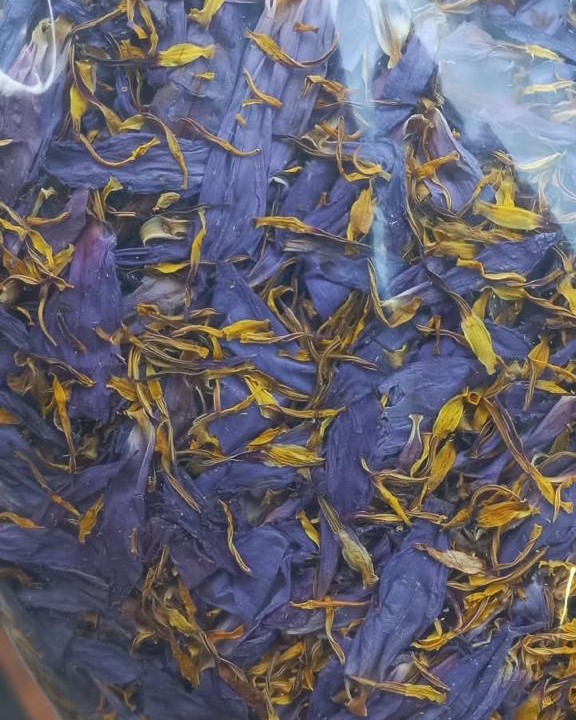
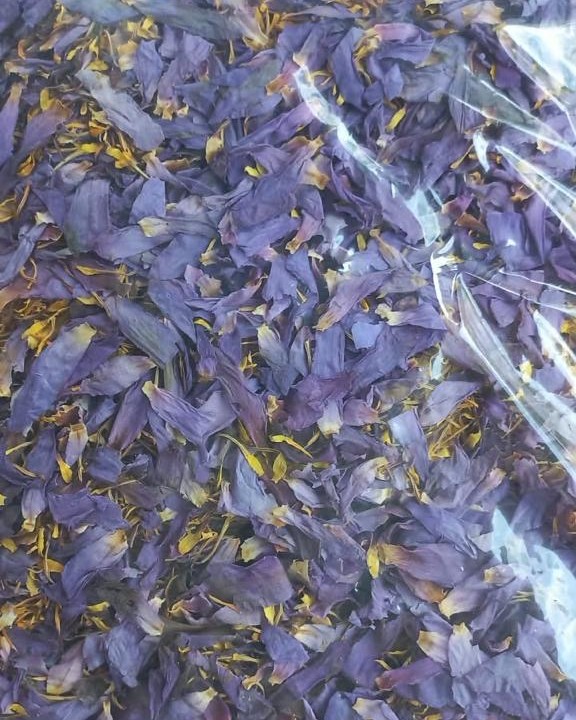
| Appearance | Deep blue-violet petals with golden-yellow stamens; dry and brittle |
| Origin | Stated on each quote and lot document |
| Moisture | Target below 12%; lot value on the COA |
| Packaging | Sealed food-grade poly bags, 100 g to 5 kg |
| Shelf life | 12 months or more when stored sealed, cool and dry |
| Storage | Sealed container, cool and dry (15-25 °C, under 50% humidity), away from light |
Available pack sizes
- 100 g sample pack
- 1 kg wholesale bag
- 5 kg+ bulk, by quote
- Private-label options on request
Sold as a botanical for commercial buyers. Local laws on sale and labeling vary; see our legal FAQ.
About blue lotus (Nymphaea caerulea)
Blue lotus is the common name for Nymphaea caerulea, a water lily that grows in slow, shallow water. It is rhizomatous, with round floating leaves and flowers that open above the surface in blue to violet with a golden-yellow center. Kew’s Plants of the World Online gives its native range as Egypt to southern Africa, the southern Arabian Peninsula and the Comoros, and some botanists list it as Nymphaea nouchali var. caerulea.
It is also called the Egyptian blue water lily or sacred blue lily, and it appears throughout ancient Egyptian art. Do not confuse it with sacred lotus (Nelumbo nucifera) or with the white Egyptian lotus (Nymphaea lotus). These are different plants, so check the botanical name on every spec sheet.
Quick facts
- Genus and family: Nymphaea, Nymphaeaceae
- Common names: blue lotus, blue water lily, Egyptian blue lotus
- Native range: Egypt to southern Africa, southern Arabian Peninsula, Comoros
- Flower: blue-violet petals, golden-yellow stamens
- Sold as: a dried botanical for business buyers
Common wholesale uses
Our customers buy dried blue lotus flower as a botanical ingredient and as a finished-product component. What you may sell, and how you may label it, depends on local rules, so check them before you launch a product.
Loose-leaf and herbal blends
An ingredient for retailers and brands that blend and pack their own loose products.
Sachets and potpourri
The blue-violet petals and golden stamens suit decorative sachets, potpourri and gift sets.
Aroma and craft products
Used by makers of candles, soaps, incense and other craft and aroma products.
Private-label packs
Your own pack size, label and branding, sourced from one supplier.
Retail resale
Ready-to-sell bags for tea, herb, apothecary and specialty shops.
Repackaging
Bulk bags for online sellers who repack into their own sizes.
Buyer checklist for dried blue lotus
Use this list with any supplier, including us. Our buyer’s guide explains each point.
Confirm the species
The botanical name should read Nymphaea caerulea, not just “lotus”.
Ask for the origin
The country of origin should be stated on the quote and lot paperwork.
Request a COA
Identity, moisture, microbial counts, heavy metals and pesticide residues.
Check the moisture
Look for a stated moisture value, with a target below about 12%.
Inspect a sample
Color, stamens, dryness and a clean look with no mold, stems or debris.
Check packing
Sealed food-grade bags that protect the flower from moisture and breakage.
Dried blue lotus flower
Photos and a short video of the dried blue lotus flower as supplied. Lot photos are shared with every quote.
Product questions
How should I store dried blue lotus?
Keep it in a sealed, airtight container in a cool, dry place away from light, ideally 15-25 °C and under 50% humidity.
Is blue lotus the same as sacred lotus?
No. Blue lotus is Nymphaea caerulea, a water lily. Sacred lotus is Nelumbo nucifera, a different plant.
Can I get a certificate of analysis?
Yes, on request. Ask for it when you request a quote or sample.